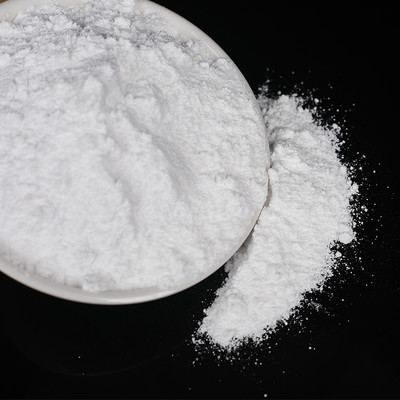
As we reach September 2026, China’s silica market is undergoing supply‑demand restructuring driven by innovations in downstream new materials. Traditional peak seasons no longer bring across‑the‑board price surges, and product value gaps have become the decisive factor for corporate profitability. Looking back at market performance throughout the third quarter, inventory of general‑grade products gradually accumulated during the off‑season. Entering September, downstream manufacturers began phased restocking with more rational purchasing strategies, abandoning the large‑scale stockpiling seen in previous years. The two core downstream sectors, tires and silicone materials, operate in divergent conditions. Coatings and rubber‑plastic products maintain rigid‑demand replenishment cycles. Continuous order releases from emerging tracks such as new‑energy supporting materials and high‑end electronic packaging sustain strong market prosperity for specially modified silica, whose price resilience outperforms ordinary grades significantly. The whole industry is evolving from cyclical market swings toward long‑term value‑driven development. Evaluation standards have shifted from pure quotation comparison to comprehensive assessment of product performance, batch‑to‑batch stability and supporting technical services.
Upstream raw‑material markets stay generally stable with narrow price fluctuations for soda ash and sodium silicate. Following previous adjustments, energy costs have entered a steady phase, greatly weakening their power to push or suppress market prices. No extreme one‑way price spikes or crashes have occurred for raw materials this year. Profit gaps between companies no longer depend on raw‑material cycles, but on industrial‑chain layout and product portfolios. Integrated leading enterprises rely on self‑supplied raw‑material facilities and energy‑saving production lines to hedge against external volatility and maintain decent and stable profit margins. In contrast, most small‑and‑medium‑sized factories purchase raw materials externally with high production and waste‑treatment costs. Squeezed by homogeneous low‑end competition, their profit margins keep shrinking. Operating rates are flexibly adjusted according to order volumes, and production is voluntarily reduced to avoid losses when orders dry up. With regular nationwide inspections over environmental protection, energy consumption and workplace safety, numerous outdated production lines with inadequate pollution‑treatment capacity run at low loads all year round. Some small plants suspend operation temporarily. Ineffective industrial capacity is phased out passively, the overall supply structure is optimized continuously, and expansion momentum for surplus low‑end capacity is effectively curbed.
Demand in the tire industry presents a polarized pattern. High‑end tire projects for new‑energy vehicles keep expanding. Major tire manufacturers build new production lines for low‑rolling‑resistance green tires. Formulas are iterated to raise the dosage of high‑dispersion silica, with strict requirements on powder dispersion stability, dynamic hysteresis, wear resistance and tear strength. Every batch of products undergoes long‑term formula verification and real‑vehicle testing. Material manufacturers with customized development capabilities are more likely to secure annual long‑term orders and establish stable strategic partnerships. Demand for commercial tires and civilian replacement tires remains tepid. Slow growth in domestic car ownership dampens consumption momentum in the replacement market. Downstream buyers adopt conservative procurement strategies with only periodic restocking, which merely offers basic support for conventional precipitated silica and can hardly drive price increases. Fundamental changes have taken place in supply‑chain cooperation models. Downstream tire manufacturers prefer joint formula development with material suppliers to jointly optimize reinforcement systems, instead of simply choosing products with the lowest prices. R&D strength of material suppliers has become the core advantage for winning high‑end orders.
The recovery of the silicone industrial chain concentrates on high‑end finished products. Markets for low‑end silicone oil and ordinary silicone rubber face fierce competition and thin profits. By contrast, capacity for photovoltaic sealants, insulating silicone rubber for power batteries and cable sheathing materials expands steadily with robust market demand, boosting the consumption of low‑volatility, high‑reinforcement fumed silica and modified precipitated silica. Silicone rubber producers impose stricter standards on impurity control, transparency, reinforcing performance and batch consistency. Low‑end conventional silica fails to meet manufacturing requirements for premium silicone products, easily causing problems such as yellowing, insufficient mechanical properties and poor storage stability. Market share keeps transferring to high‑quality domestic silica, and domestic high‑end products are speeding up import substitution. Traditional segmented markets including coatings, leather matting agents, pesticide carriers and daily‑use thickeners maintain steady demand with mild seasonal fluctuations. Mid‑range functional silica achieves stable consumption, forming a solid fundamental demand base for the industry and keeping overall operating rates at a reasonable level.
Rules for export markets keep upgrading, and low‑carbon compliance has become a mandatory threshold for overseas orders. When purchasing silica products, European and American clients require complete carbon‑emission traceability data, production compliance certificates and third‑party test reports with increasingly rigorous supply‑chain low‑carbon audits. Products without carbon‑footprint certifications are disqualified from bidding. Domestic leading enterprises equipped with low‑carbon upgraded production lines enjoy remarkable competitive edges. Export volume and transaction prices of their high‑end modified silica rise simultaneously, and overseas clients prioritize long‑term stable supply together with full compliance documents. The rubber, tire and shoe‑making industries in emerging markets across Southeast Asia, the Middle East and Latin America grow steadily with continuous infrastructure construction, offering a stable export foundation for domestic general‑grade silica and sustaining overseas sales channels for medium‑and‑small manufacturers. The overall export structure continues to optimize. Foreign‑trade profit focus shifts gradually from high‑volume low‑cost goods to high‑value‑added specialty products. Export trade bids farewell to vicious low‑price competition and enters a new phase of quality‑oriented rivalry.
Industrial R&D focuses more closely on real‑world downstream application pain points. Enterprises stop blind capacity expansion for general‑purpose grades and invest in dedicated modified production lines to develop exclusive silica for segmented scenarios such as new‑energy composite materials, thermal‑conductive insulating materials, anti‑corrosion coatings and medical auxiliaries. Corporate research is no longer limited to adjusting basic indicators. Teams dive deep into downstream formula systems to tackle practical production challenges including poor powder dispersion, storage sedimentation, high‑temperature aging failure and insufficient weather resistance. Dimensions of market competition keep expanding. Beyond product performance itself, supporting services such as fast sample preparation, small‑batch trial production, technical communication, stable delivery and full‑process technical support gradually become key considerations for clients when selecting suppliers. Material enterprises transform from simple raw‑material vendors into professional material‑solution partners for downstream users, and service value accounts for an increasing proportion within the industrial chain.
Overall, demand dividends during September and October will continue to release with limited driving force, and the divergent market pattern will persist. In the short term, abundant supply and large inventory keep prices of general‑grade silica fluctuating at low levels with narrow profit margins. High‑end tire‑specific, electronic‑grade and modified functional silica maintain tight supply‑demand balance. Long‑term downstream orders lock up product sources and sustain firm prices, forming the major profit pool of the whole industry. In the medium‑to‑long run, industrial survival‑of‑the‑fittest reshuffling will move forward. Three major thresholds covering environmental protection, energy consumption and export compliance keep rising, phasing out backward capacity and concentrating premium resources on leading enterprises. Future growth of the silica industry will no longer rely on extensive capacity expansion. Value improvement will be realized through upgrading iterations of downstream new‑material sectors. Enterprises mastering core modification technologies and customized service capabilities will seize a dominant position in future market competition and push the whole industry toward refined, high‑end and green new‑material transformation.