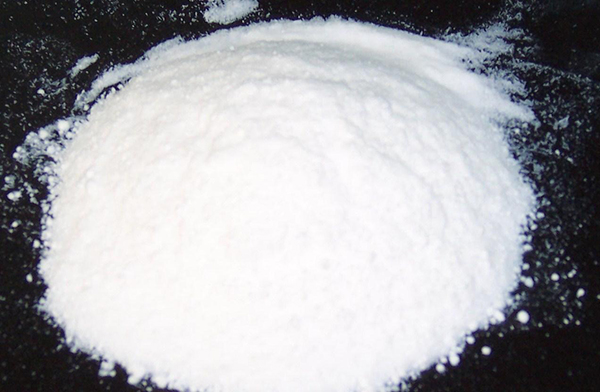
Entering September 2026, China’s silica industry has officially stepped into the traditional golden‑autumn stock‑up cycle. Overall market activity has rebounded obviously from the summer off‑season, and concentrated restocking across downstream sectors has steadily lifted inquiry volumes. At present, the overall supply‑demand balance of the industry tends to be moderately loose, yet structural differences become increasingly prominent. Conventional general‑purpose silica continues a weak trend of oversupply and price pressure. Supported by rigid demand from emerging industries, high‑end functional and specially modified silica maintains a stable tight supply‑demand relationship with firm prices. The whole industry presents brand‑new operating characteristics: capacity elimination in off‑seasons, market divergence in peak seasons, strength in high‑end segments and stable prices for low‑end grades.
From the perspective of upstream raw materials and production, prices of soda ash, sodium silicate and industrial energy have stayed stable recently without sharp swings, keeping industrial production costs under control. Raw‑material costs are no longer the core factor driving market fluctuations. Profit gaps among enterprises are now fully determined by production modes, product portfolios and technical capabilities. Large‑scale integrated leading enterprises benefit from self‑sufficient raw materials, controllable energy consumption and closed‑loop production. They maintain low and manageable manufacturing costs and stable product quality to secure sound profitability. By contrast, small‑and‑medium‑sized manufacturers rely on outsourced raw materials with high energy costs and unstable quality control. Coupled with severe homogenization of low‑end products, they can only sustain operation through low‑price high‑volume sales, lingering on the edge of slim profit or even losses, which speeds up the phase‑out of inefficient capacity. Meanwhile, regular inspections on environmental protection, energy consumption and workplace safety keep being enforced. Standardized supervision is imposed on wastewater, solid waste and waste gas discharge during precipitated silica production. A large number of inefficient production lines with outdated processes and sub‑standard environmental facilities face production restrictions, further optimizing the overall supply structure of the industry.
Demand in traditional downstream sectors rises moderately, forming solid basic support. Operating rates of rubber goods, ordinary shoe materials, conveyor belts and civil plastic products pick up steadily, generating continuous fundamental purchasing demand for silica and preventing sharp price falls for general‑grade products. Nevertheless, traditional industries have limited growth space with thin profit margins for end‑products. Downstream buyers stick to on‑demand procurement and cautious restocking instead of large‑scale inventory accumulation, removing upward price momentum for general‑purpose silica and keeping its market in sideways fluctuation. Demand from coatings, printing inks, leather, daily‑use chemicals and other matting and anti‑settling fields recovers steadily, creating stable consumption for mid‑range modified silica and offering vital support for medium‑tier products.
Emerging new‑material tracks keep booming and serve as the core growth engine for the silica industry. Driven by the rapid expansion of domestic new‑energy vehicles, energy‑storage batteries, photovoltaic industries, semiconductor packaging and high‑end insulating materials, high‑performance silica gains wider application scenarios. The continuous upgrading of low‑rolling‑resistance green tires raises stricter standards for energy saving, wear resistance and anti‑aging performance. The penetration rate of high‑dispersion silica keeps rising, and leading tire companies place long‑term locked orders, keeping high‑end products in short supply. Capacity expansion of photovoltaic adhesives, electronic sealants and silicone rubber for new‑energy cables fuels surging demand for high‑purity, low‑volatility and high‑reinforcement fumed silica. In addition, fast‑growing emerging fields such as new‑energy composite materials, thermal insulation materials, precision coatings and biomedical carriers drive incremental demand for customized, functional and ultra‑high‑purity silica, opening long‑term growth space for the whole sector.
The export market boasts strong resilience with accelerated substitution of domestic premium silica for imported alternatives. Overseas demand recovers gradually. Steady growth of infrastructure, rubber and tire industries in Southeast Asia, the Middle East, Latin America and other developing regions provides a stable base for China’s silica exports. Developed markets in Europe and America keep tightening trade barriers and carbon‑compliance thresholds. Low‑cost low‑end silica has basically lost export competitiveness. Domestic leading enterprises with low‑carbon production qualifications, complete carbon‑footprint records and advanced quality‑control systems keep grabbing market share in high‑end overseas markets. Export volume and average prices of high‑end modified silica and fumed silica move upward simultaneously. China’s silica export structure has undergone a thorough transformation from low‑volume‑cost shipments to high‑value‑oriented exports with improved quality, lifting the overall foreign‑trade profit level of the industry.
Technological upgrading and product iteration gather pace, with specialization, refinement and differentiation becoming mainstream development trends. Market competition has completely moved away from simple capacity and price rivalry, evolving into an all‑round contest over R&D strength, product customization, quality stability and supporting technical services. Major leading enterprises keep increasing R&D investment, focusing on the development of hydrophobic modification, high dispersion, ultra‑low volatility, ultra‑high purity, weather resistance and wear resistance. They develop exclusive grades for segmented downstream industries to precisely satisfy personalized formulation requirements from end‑users. At the same time, green low‑carbon manufacturing technologies are widely promoted. Technical renovations including water recycling, resource recovery of by‑products and energy‑saving transformation are being implemented. The industry is gradually shaking off its old label of high‑energy consumption and high pollution, transforming into a green, efficient, refined and high‑end new‑material sector.
Based on the overall market forecast, the peak‑season rally from September to October 2026 will persist, further reinforcing the divergent pattern across the silica industry. In the short run, loose supply and fierce competition will keep prices of general‑grade silica stable at a low level with narrow profit margins. High‑end functional, modified, electronic‑grade and tire‑specific silica enjoy robust demand and tight supply, maintaining firm prices and sufficient orders while leading industrial profitability. In the medium‑to‑long term, the general trend of capacity reshuffling, structural upgrading and technological iteration will remain unchanged. Backward inefficient capacities will keep exiting the market, and market resources, technologies and clients will further gather around high‑quality leading enterprises. The domestic silica industry will bid farewell to extensive low‑price competition and fully step into a new era of high‑quality development featured by technology empowerment, quality supremacy, low‑carbon compliance and customized services.