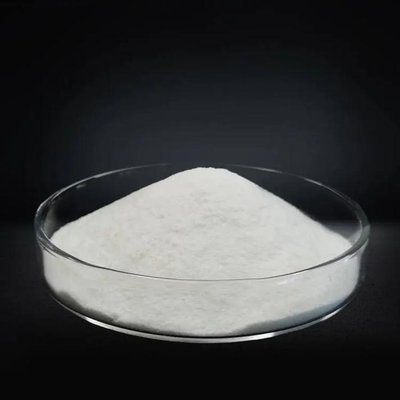
Entering late August, the domestic chemical market remains in the traditional summer off-season. Sustained high temperatures restrict the operating load of downstream manufacturing enterprises, and many factories choose to cut production temporarily to avoid risks. The upstream and downstream industrial chain holds strong wait-and-see sentiment. The overall trading atmosphere of bulk commodities is weak with few large-sample contracts, and the market is dominated by scattered rigid transactions. The precipitated silica industry continues the pattern of structural differentiation that has lasted for years, and the uneven market performance becomes increasingly prominent. The demand for general precipitated silica keeps under pressure, and the procurement rhythm of traditional downstream sectors such as tires and ordinary rubber slows down. Most market transactions are scattered rigid orders, with prices fluctuating within a narrow range and limited fluctuation space. Most precipitated silica enterprises take the initiative to control production and stabilize prices, flexibly adjusting inventory levels to prevent disorder in the market caused by dumping at low prices. In sharp contrast, high value-added products including various modified precipitated silica and fumed silica are supported by stable procurement demand from emerging industries such as lithium battery materials, photovoltaic supporting materials, high-end organosilicon, pharmaceutical carriers, special anti-corrosion coatings and food additives. These products have sufficient order reserves, full medium and long-term order backlogs and strong quotation resilience. Less disturbed by the seasonal off-season, they have become the main profit growth point of the industry. With the continuous upgrading of downstream industries, the logic of market competition keeps changing. The model of seizing the existing market by low-price sales is gradually phased out. Customized research and development, supporting of high-performance products and complete technical services have become the core competitiveness for enterprises to seize the high-end market.
In terms of raw material costs, the main raw materials for precipitated silica including sodium silicate, soda ash and sulfuric acid have operated weakly recently. The soda ash market is well supplied with accumulating social inventory. The demand recovery of downstream glass and daily chemical industries is sluggish, leading to prolonged low price fluctuation and insufficient support for finished products. Affected by the off-season of traditional downstream sectors such as fertilizer and metallurgy, the overall demand for sulfuric acid shrinks, and quotations drop in many regions. The falling prices of basic raw materials have eased the cost pressure on precipitated silica manufacturers to a certain extent. Small and medium-sized manufacturers see a slight recovery in profit margins and relieved survival pressure. However, the production chain of fumed silica is significantly different from that of precipitated silica. Price transmission of upstream organosilicon monomers and high-purity silicon raw materials is sensitive, and minor fluctuations of raw materials will directly affect production costs. Meanwhile, the fumed silica process consumes large amounts of energy. Supporting investment in wastewater treatment, waste gas management, powder purification and surface modification remains high, resulting in rigid production costs. It is difficult for high-end product prices to follow the decline of bulk raw materials. The cost gap brought by different production processes further widens the hierarchical pattern of high-end and low-end products in the industry, and the profit levels of the two tracks keep diverging.
The supply side presents a clear polarized pattern: ordinary precipitated silica has sufficient capacity supply, while high-end special grades face long-term capacity shortage. Leading domestic precipitated silica manufacturers maintain a moderate operating rate, generally implementing production based on sales and arranging production according to orders. They slow down the launch of new large-scale capacity and take the initiative to avoid vicious low-price competition in the industry so as to maintain the overall market order. A large number of small and medium-sized production lines focus on manufacturing homogeneous general products without independent modification technology support, making the products highly substitutable. To compete for the existing market such as tires and ordinary rubber products, such manufacturers often adopt the strategy of selling at discounted prices, continuously curbing the upward space of general precipitated silica prices. In the fumed silica track, leading domestic manufacturers keep optimizing production processes, continuously improving powder purity, dispersibility and hydrophobic effect, and steadily advancing import substitution. Nevertheless, ultra-high-purity hydrophobically modified grades applicable to semiconductors, lithium battery separator coatings, food, medicine and high-end optical consumables have limited capacity, high production technical barriers, large equipment investment and longer delivery cycles, remaining in a long-term state of supply shortage. High-end products feature prominent bargaining power and considerable profit margins.
The divergence of downstream demand continues to emerge: demand weakens in traditional fields while emerging high-end tracks keep expanding. Traditional application fields including tires, ordinary rubber parts and civil conventional coatings see terminal enterprises reduce production loads due to the high-temperature off-season. The procurement side generally adopts the just-in-time procurement strategy. Enterprises are reluctant to stock up on a large scale, and insufficient willingness for centralized stockpiling directly drags down the market demand for general precipitated silica. Emerging fields such as lithium battery separator coatings, photovoltaic sealing silicone rubber, oral care abrasives, food anticaking agents, high-end printing inks, electronic packaging materials and medical silicone products enjoy sound development momentum. Downstream customers impose strict control over indicators of precipitated silica such as impurity content, specific surface area, dispersibility, weather resistance and hydrophobic performance. The proportion of customized procurement keeps rising, continuously driving incremental procurement demand for various custom modified precipitated silica. Meanwhile, policies for green tire upgrading are continuously implemented, energy-saving standards of domestic automakers are improved, and tire manufacturers keep optimizing formulations, promoting steady growth in alternative demand for high-dispersion precipitated silica in the tire industry. This also provides an important direction for the transformation and development of numerous precipitated silica enterprises.
The access threshold of the foreign trade market keeps rising, and the structure of export products accelerates optimization. In recent years, global green trade rules have been continuously improved. Overseas buyers have increasingly strict requirements for compliance documents such as carbon footprint traceability, low-carbon production certification, product safety test reports and heavy metal limits. Domestic enterprises with green production qualifications, a complete quality control system and full testing capabilities have obvious advantages in international bidding and are more likely to obtain long-term overseas orders. Markets in Europe, America and Southeast Asia maintain stable demand for special functional precipitated silica with considerable export profits. The export competition for ordinary industrial precipitated silica is fierce. The continuous expansion of local supporting capacity in Southeast Asia and prevalent bargaining by overseas purchasers continuously squeeze the export profits of low-end products. The market environment forces domestic enterprises to accelerate phasing out backward low-end capacity, increase investment in research and development, adjust the structure of export products and raise the export proportion of high value-added products. In addition, fluctuations in international shipping prices, changes in geopolitical trade policies of various countries and tariff adjustments bring many uncertainties to the delivery of foreign trade orders, cost accounting and contract signing of precipitated silica, increasing the operational difficulty of foreign trade enterprises.
Outlook for market trend: in the short run, demand from traditional downstream sectors has not ushered in a recovery window. Conventional precipitated silica is expected to maintain weak and volatile operation, lacking sufficient momentum for sharp price rises or falls. The core of market operation lies in the game between supply and demand. With the arrival of the traditional peak season "Golden September and Silver October" in September, the operating rate of downstream industries such as rubber products, coatings, inks and plastic products is expected to gradually recover. The centralized release of downstream restocking demand may drive a month-on-month rise in overall market inquiries for precipitated silica, and the trading atmosphere may improve slightly. In the medium and long term, China’s dual-carbon control continues to advance, environmental supervision becomes normalized, and green low-carbon production, customized surface modification and high-purity functionalization will become the main lines for the transformation and upgrading of the precipitated silica industry. Industrial capital, high-quality orders and profits will keep tilting toward leading enterprises with independent research and development capabilities and complete supporting services. The profit gap between high-end and low-end products may further widen. Future industrial competition will no longer simply compare production capacity scale. Powder modification formulas, refined surface treatment processes, supporting technical service capabilities and full-process quality control level will jointly determine enterprises’ long-term market position and industry discourse power.