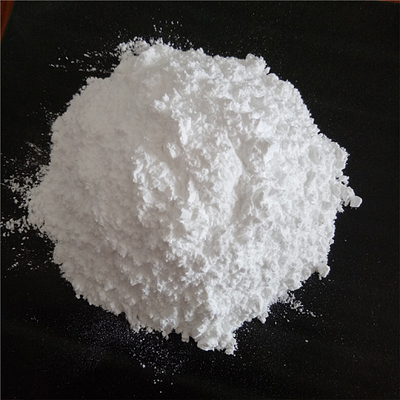
Entering late August, the domestic market for inorganic powder raw materials generally follows the operating rhythm of the off-season. High temperatures restrict the operating rate of downstream factories, and market participants hold a wait-and-see attitude. Spot trading of precipitated silica remains subdued overall, and differentiated competition within the industry becomes increasingly prominent. With the accelerated refinement of various downstream sectors, overcapacity and thin profit margins have long plagued general-grade precipitated silica. It is difficult to achieve efficiency improvement merely through large-scale production. Many manufacturers have adjusted their development strategies, shifting from mass production of general fillers to in-depth cultivation of segmented tracks. They develop special precipitated silica tailored for specific scenarios to realize product premium via customized performance and explore new profit space. Unlike traditional general fillers which mainly serve basic reinforcement and filling purposes, special precipitated silica adjusts core indicators including particle size, specific surface area, surface functional groups and dispersibility according to end-user demands. It targets pain points of downstream materials such as yellowing tendency, insufficient wear resistance, uneven defoaming and poor adhesion, holding irreplaceable application value in numerous high-end manufacturing fields.
From the perspective of upstream raw materials and production costs, cost divergence among different types of precipitated silica continues to widen. Traditional precipitated general-grade precipitated silica is produced with bulk chemical raw materials such as soda ash, sodium silicate and sulfuric acid. Raw material prices are transparent and market competition is full, resulting in long-term compressed profit margins. In contrast, high-end special modified precipitated silica and fumed silica require supporting special modifying additives, airtight reaction equipment, precision grinding and classification devices as well as professional testing laboratories besides basic raw materials. Upfront equipment investment and daily R&D costs are higher, significantly lifting industrial entry barriers. Recently, prices of basic chemical raw materials have fluctuated, increasing cost control pressure on small and medium-sized precipitation manufacturers. Producers lacking R&D capacity can only keep accepting orders at low prices, with shrinking living space. Leading enterprises equipped with complete modification R&D platforms can hedge cost risks brought by raw material fluctuations through formula optimization and process improvement for lower unit energy consumption, boasting more stable profitability.
In terms of supply pattern, the overall domestic capacity of precipitated silica is sufficient, yet obvious structural shortages exist in product supply. Continuous capacity release of general precipitated precipitated silica leads to oversupply and prolonged downward pressure on market prices. Nevertheless, supply gaps remain for special modified grades and ultra-high-purity fumed silica suitable for high-end scenarios, and certain high-end grades still rely partially on imports. Many enterprises have halted new construction of general precipitation production lines and turned to building production lines for special precipitated silica with high dispersion, hydrophobic modification and low oil absorption. Meanwhile, supporting post-processing capacity for powder in the industry keeps improving. Procedures such as ultrafine grinding, surface modification, classification and purification are gradually developing into independent specialized sectors, helping powder manufacturers quickly adjust product performance and shorten the iteration cycle of new product R&D. Regional capacity layout is also adjusted accordingly. Areas rich in mineral resources retain basic precipitation capacity, while parks close to high-end new material industrial clusters focus on high-end modified and fumed precipitated silica projects, forming the industrial cluster advantage of nearby upstream and downstream matching.
Segmented demand in the downstream application market keeps releasing, and performance requirements for precipitated silica vary distinctly across sectors. In the tire and rubber sector, the market no longer only pursues reinforcing effects, but prioritizes special high-dispersion precipitated silica featuring low rolling resistance and high wear resistance to fit formulas of new energy tires and eco-friendly green tires. In the coating and ink industry, demand for matting, anti-settling and highly transparent modified precipitated silica rises steadily for water-based industrial coatings, wood coatings and high-end printing inks. Consumption of low-volatility and high-reinforcement fumed silica continues to grow in the silicone rubber and sealant industry. Furthermore, corresponding food-grade, pharmaceutical-grade and plastic-special precipitated silica have been launched successively in segmented markets including feed additives, daily care products, pharmaceutical carriers and engineering plastics. Diversified demand in downstream segmented markets continuously pushes upstream manufacturers to build a customized development service system, adjust powder parameters targeted to customers’ formula requirements and provide supporting technical services such as sample testing and formula debugging.
In the foreign trade market, overseas procurement demand also presents a polarized pattern. Competition for overseas orders of bulk general precipitated silica is fierce. Local capacity in Southeast Asia and the Middle East keeps expanding, and overseas buyers impose obvious price pressure, gradually weakening the export advantages of domestic low-end products. In contrast, overseas procurement demand for various special modified precipitated silica and high-purity fumed products remains stable. New material enterprises in Europe, America, Japan and South Korea make long-term purchases. Such products feature high added value and are less impacted by low-price competition. Meanwhile, product access standards in overseas countries keep tightening, with stricter requirements for testing items including heavy metal content, volatile impurities, microbial indicators and environmental emissions. Manufacturers capable of completing full compliance testing and providing complete quality inspection reports can more easily secure long-term overseas customers. Many foreign trade enterprises have adjusted export structures, reduced the shipment proportion of general precipitated silica and vigorously promoted various special functional fillers to explore the global high-end powder market.
Industrial supervision and the standard system are constantly improved, accelerating market survival of the fittest. China has successively updated national and industrial standards for precipitated silica used in inorganic fillers, rubber compounding agents and food additives, putting forward more standardized requirements for product purity, impurity limits and production environments. Regular supervision over environmental protection and energy conservation keeps moving forward. Small and medium-sized factories with inadequate environmental supporting facilities and substandard energy consumption face production restriction and rectification, driving continuous elimination of backward capacity in the industry. At the same time, industry-university-research cooperation deepens. Major research institutions and powder enterprises jointly tackle key problems in new surface modification technologies and continuous preparation processes, constantly lifting the performance ceiling of domestic special precipitated silica and gradually breaking the long-term monopoly of overseas enterprises in the high-end market.
Market outlook prediction: the off-season sentiment will persist in the short run. The market of general precipitated precipitated silica is unlikely to see marked improvement, with prices fluctuating at low levels and transactions dominated by restocking for rigid demand. When downstream industries usher in the traditional peak season in September, enterprises engaged in rubber, coatings and sealants will conduct centralized stock preparation, and special functional precipitated silica is expected to witness a rebound in orders. In the medium and long term, incremental space of the industry will concentrate on various segmented special tracks. The extensive development model relying on price competition will completely exit the mainstream market. In the future, enterprises’ core competitiveness will be reflected in new product R&D capacity, customized technical services, stable product consistency and full-process compliance management capability. Cultivating segmented fields and building a product matrix of special functional fillers will serve as the core path for precipitated silica enterprises to achieve breakthroughs and build long-term competitive barriers.