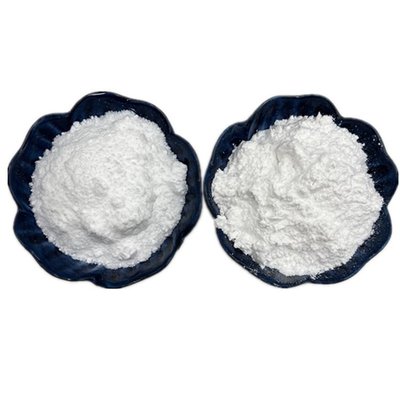
Mid-August still finds China’s chemical market enveloped in the summer off-season atmosphere. Downstream purchasing slows for rubber products, building waterproof materials, industrial coatings and various rubber-plastic auxiliary materials. The vast majority of end factories adopt a conservative operational strategy: replenish stock only on demand and strictly cap total inventory. In past sweltering summers, the silica industry generally cut prices to clear inventory with market prices sliding broadly. However in 2026, cyclical volatility has diminished sharply, the divide between peak and off seasons has grown vague, and a tiered, differentiated operational pattern has taken firm hold.
Supply and demand stay balanced for conventional precipitated silica used in traditional tires, ordinary rubber hoses and transmission belts, with prices hovering amid mild fluctuations. High-end fumed silica applied to photovoltaic module encapsulant, ceramic coatings for lithium battery separators, as well as sealing and shock-absorbing components for precision electronics remains in tight spot supply with steady, firm quotations. Low-carbon silica produced via the rice husk ash agricultural and forestry solid waste recycling process has secured access to high-end European and American markets through complete carbon footprint certification, bringing in successive long-term overseas orders and continuously optimizing the structure of foreign trade. Industrial competition has moved past the preliminary stage of output rivalry and evolved into a comprehensive contest centered on low-carbon production qualifications, customized formula modification and multi-scenario application adaptation.
Based on field visits on August 15 and monitoring data from industrial platforms, the average ex-factory price of mainstream domestic industrial-grade precipitated silica holds steady at 6,000 CNY per ton. Overall fluctuation stood below 2% in the first half of August amid mild, stable market performance, alongside widening price gaps across product grades.Conventional rubber-reinforcing silica is quoted between 5,750 CNY and 6,200 CNY per ton, mainly supplied to commercial vehicle tires, regular gaskets, conveyor belts and other traditional sectors with sluggish trading and limited upward momentum. Demand for high-dispersion modified silica tailored for quiet, low rolling-resistance new energy vehicle tires climbs steadily, pushing its market price up to 6,320–6,700 CNY per ton. High-purity precipitated silica for food anti-caking agents, pharmaceutical excipients and toothpaste abrasives is unaffected by seasonal cycles, stabilizing at roughly 6,500 CNY per ton.
Price tiers for fumed silica are even clearer: domestic general hydrophobic grades are priced at 20–23.4 CNY/kg; ultra-fine hydrophobic modified fumed silica dedicated to photovoltaic and energy storage adhesives is scarce at 25–28 CNY/kg; imported ultra-high-purity electronic-grade products still dominate the top segment at 28.9–39 CNY/kg, while domestic substitution of premium varieties advances steadily.
Supply-side operating rates show pronounced divergence, with the overall industrial utilization rate ranging from 75% to 80%. Leading silicon material enterprises operate production lines at full capacity round the clock backed by long-term framework orders for new energy adhesives, eco-friendly tires, premium daily chemicals and low-carbon export products, maintaining persistently low finished goods inventory. Burdened by insufficient sporadic orders and slim processing margins, small and medium-sized manufacturers voluntarily cut production loads, scheduling line maintenance and environmental equipment upkeep during the off-season to avoid unprofitable price-driven competition, effectively easing the oversupply of low-end silica.
Prolonged heat has further widened the production cost gap between northern and southern production hubs. Established industrial clusters in East and South China must run cooling equipment nonstop for workshops. Energy consumption for harmless wastewater and waste gas disposal plus operating expenses for online environmental monitoring systems have risen concurrently, driving rigid production costs higher and drastically limiting room for price cuts on low-end products. Northern production bases enjoy cooler summer weather, spacious factory grounds, reduced logistics costs from local procurement of quartz sand and sodium silicate, and lower energy consumption for cooling and three-waste treatment, granting them distinct comprehensive cost advantages. Recently, a large number of inland traders have shifted purchasing preferences northward, lifting the circulation share of northern supplies and quietly reshaping regional supply-demand patterns. Industry researchers note that structural overcapacity of conventional mineral-based silica has not been fully resolved. Demand growth for fuel vehicle tires remains sluggish, sustained only by the tire replacement market, which cannot fuel a sustained upturn for low-end grades. While homogeneous price competition has cooled noticeably, it has not vanished entirely.
Emerging non-tire application sectors boast robust growth momentum, having surpassed the traditional rubber market in scale to become the core engine driving industrial expansion. The third quarter marks a concentrated delivery window for China’s photovoltaic industry, with residential distributed photovoltaic stations and large-scale ground-mounted energy storage projects completed and commissioned in batches. Production and sales thrive for silicone sealants for photovoltaic encapsulation. As a core anti-settling, thickening and UV aging-resistant filler in adhesive formulations, hydrophobic nano fumed silica has had its full-quarter purchasing volumes locked in advance by downstream adhesive manufacturers, leading to scarce spot goods and extended mainstream delivery cycles of roughly two and a half months.
Power and energy storage battery producers keep iterating safety coating technologies for separators. High-purity ultrafine silica greatly enhances separators’ heat resistance and puncture strength, seeing year-on-year rising application ratios. Leading domestic material suppliers have postponed production schedules to mid-October amid mounting order fulfillment pressure. Rising penetration of new energy vehicles brings heavier curb weights and stronger instantaneous starting torque, raising stringent standards for tire noise reduction and rolling resistance. Tire formulas contain 15%–22% more high-dispersion silica than those for fuel vehicles, supporting steady demand release for modified precipitated silica and forming one of the few stable growth points within the tire segment.
Moreover, niche sectors including fine daily chemicals and pharmaceutical excipients exhibit remarkable demand resilience: soothing and thickening fillers for personal care products, toothpaste abrasives and anti-caking agents for tablets maintain stable year-round demand free from seasonal swings. Ultra-high-purity fumed silica serves as the base material for internal sealing, shock absorption and thermal buffering components in wireless earbuds, smart bracelets and miniature sensors. These high-end niche segments far outpace traditional industrial fields in growth rate, continuously broadening silica’s overall application boundaries.
Foreign trade sustains healthy growth in both volume and value, with increasingly diversified export destinations effectively offsetting market impacts brought by the formal implementation of the EU Carbon Border Adjustment Mechanism (CBAM). Customs statistics for the first half of 2026 show China exported 769,000 tons of silica from January to June, a year-on-year increase of 11.9%; total export value reached USD 442 million, up 21.15% year-on-year alongside rising average export prices. Imports totaled merely 40,000 tons, down 8.95% year-on-year as domestic substitution of high-end products accelerates.
Following regular CBAM collection, traditional silica manufactured via the quartz sand and sulfuric acid process carries a substantial carbon footprint, sharply inflating export tariff costs. Small and medium-sized factories lacking conditions for low-carbon upgrading and complete carbon emission ledgers have gradually withdrawn from the European market. The rice husk ash recycling process, researched and refined by domestic leading enterprises for over a decade, has ushered in fruitful development. Replacing mineral quartz sand with agricultural waste rice husk ash cuts overall production carbon emissions by more than 60% compared with traditional processes, and certain products achieve carbon negativity. Having obtained EU green raw material certification, these products can not only evade hefty carbon tariffs during exports but also secure a green premium of 8% to 15%, with order growth far outstripping that of conventional industrial-grade silica.
At present, Southeast Asia, the Middle East, Central Asia and North Africa have evolved into core overseas markets for China’s mid-to-low-end silica. Benefiting from zero-tariff preferences under the RCEP free trade agreement, Vietnam, Indonesia, Thailand and other Southeast Asian nations keep expanding industries of rubber goods, construction sealants and daily chemicals, absorbing massive volumes of domestic conventional precipitated silica. Countries across the Middle East spare no effort to advance urban infrastructure and oil & gas supporting projects, triggering explosive demand for building sealing materials and industrial rubber parts, with import volume surging more than 30% year-on-year in the first half of the year. Light industries in Central Asian countries develop steadily, releasing moderate demand for basic silica fillers. Multiple industrial leaders have accelerated global capacity layout, constructing fine processing and packaging bases in Southeast Asia. Domestic factories undertake core technical procedures including raw material purification and surface modification, while overseas bases finish packaging and delivery to comply with local trade policies, circumvent carbon tariffs and various trade barriers, and steadily consolidate overseas market share.
Low-carbon closed-loop circular production and customized formula R&D have become the pivotal watershed reshuffling the industry, speeding up the phase-out of high-energy-consuming, high-polluting backward and inefficient capacity. The conventional production route featuring high-temperature melting to prepare water glass followed by sulfuric acid acidification consumes vast quantities of non-renewable quartz mineral resources, generates over 4 tons of carbon emissions per ton of finished product, and discharges huge volumes of intractable high-salinity wastewater. Annual environmental operation costs keep rising, continuously squeezing corporate profit margins. Nowadays, innovative technologies such as rice husk ash resource utilization and carbon dioxide carbonization have achieved full-scale mass production. Silicon elements are extracted from rice husk ash, waste heat generated by incineration is recovered to supply production heating for factories, carbon dioxide replaces sulfuric acid for acidification, and production byproducts can be recycled and reused, fundamentally tackling the problem of high-salinity wastewater disposal from the source.
This production model not only consumes agricultural solid waste and eliminates air pollution caused by open burning of rice husks in farmlands but also drastically cuts production energy consumption and carbon emissions. The purity and dispersibility of finished products better satisfy the stringent application standards of premium daily chemicals and green tires. Many leading enterprises have built a blockchain-based full-process carbon tracing system, which fully records carbon emission data throughout raw material procurement, production processing and finished product outbound delivery, and have obtained International Environmental Product Declarations (EPDs), granting them prominent advantages in overseas brand supply chain admission and bidding for large-scale engineering projects.
In contrast, small workshops suffer from capital shortages, incapable of upgrading environmental equipment or establishing carbon accounting systems, and lack R&D capabilities for surface modification. They can only compete for scattered small orders through low prices, leading to shrinking living space and continuous concentration of industrial capacity among leading enterprises. Multiple industrial institutions predict that the combined market share of the top five enterprises will see a notable uplift by the end of 2026.
Regarding the overall market trend from late August to the fourth quarter, industrial analysts have reached a consistent forecast of steady differentiation: late August will remain within the traditional summer off-season without sharp price surges or slumps across the market; conventional precipitated silica will fluctuate within a narrow range for consolidation; tight supply will persist for high-end fumed silica dedicated to photovoltaics, lithium batteries and electronics with prices staying firm. Upon entering September, the rubber processing, waterproof material and industrial coating industries will usher in the traditional autumn construction peak. Coupled with concentrated release of downstream stocking demand ahead of the Mid-Autumn Festival and National Day holidays, the overall silica market will witness a mild phased recovery.
In the long run, the extensive development model characterized by blind capacity expansion and vicious price competition has come to a complete end. Customized surface modification technologies, low-carbon closed-loop circular production systems and balanced layout across domestic and overseas markets will serve as three core factors determining enterprises’ core competitiveness. Silica will thoroughly shed its single label as a traditional rubber reinforcing filler and gradually evolve into a key inorganic silicon new material widely applied across six major sectors: new energy storage, automobile manufacturing, fine daily chemicals, biomedicine, precision electronics and agricultural & forestry circular materials, advancing continuous transformation and upgrading toward green development, refinement and high-end positioning.