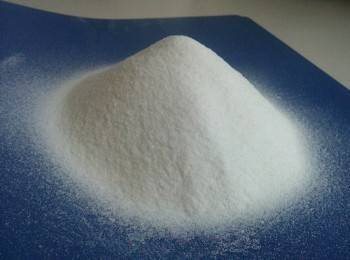
By mid-August, extensive persistent high temperatures still prevail nationwide. Industrial clusters in East China, North China and Central China have ushered in the annual production off-season. Scorching weather impairs the continuous safe production efficiency of chemical enterprises, and curtails the willingness of downstream end manufacturers covering automobiles, rubber goods, architectural coatings and other sectors to ramp up operations. In previous years, silica prices usually softened and spot transactions turned sluggish amid shrinking downstream purchases. Yet the operational logic of the industry has shifted markedly this year. Bolstered by solid upstream raw material costs, coordinated production cuts and price stabilization policies rolled out by major domestic silica manufacturers, together with sustained procurement demand from emerging industries including new energy vehicles, photovoltaic encapsulation, lithium battery supporting materials and precision electronics, the overall silica market has stepped out of weak volatility and posted a mild uptick. The price gap between different product grades keeps widening: low-end filler grades see balanced supply and demand with stable prices, while high-end functional silica suffers tight supply and firm quotations, which stand out as the most prominent industrial feature at present. According to real-time monitoring data released by domestic silicone big data platforms and bulk commodity information institutions on August 12, the comprehensive benchmark quotation for domestic silica hit 6000 CNY per ton on the day, edging up from the previous day and registering a cumulative increase of over 1% compared with early August. The downward trend in late July has been successfully reversed, and the bottom support of the industry has become increasingly solid. The market trend varies drastically across segments: precipitated silica recovers slowly driven only by rigid orders with moderate and restrained growth; high-purity fumed silica has long stayed at high levels with negligible price swings, and the gap in spot availability vividly mirrors the divergence in market sentiment.
In terms of overall market supply, the average operating rate of domestic silica production units is steadily maintained between 62% and 65%, around 30% lower than the full-load output during spring and autumn peak sales seasons. The industry clearly intends to curb capacity release and ease overcapacity pressure. The prolonged heat brings enormous heat dissipation burden to production lines and mounting safety management risks. Local emergency management authorities have launched special summer work safety inspections alongside regular environmental supervision. In the five core production regions of Shandong, Jiangsu, Jiangxi, Hubei and Hunan, numerous small and medium-sized processing plants have voluntarily lowered production loads, while outdated, high-energy-consuming production lines with obsolete environmental supporting facilities have been suspended for maintenance. The contraction in supply has effectively alleviated the perennial industrial overcapacity issue and gradually reduced the total volume of silica circulating in the market. Meanwhile, several large-scale leading domestic silica enterprises have reached a consensus within the sector, abandoning the extensive competition model of seizing market share through predatory low-price dumping. Production and delivery are strictly scheduled in accordance with actual orders from downstream customers to flexibly regulate shipment pace, without blind price cuts merely to boost sales volume. At present, the overall industrial social inventory has declined to the lowest level of the year. The inventory turnover cycle of ordinary silica for conventional rubber reinforcement and plastic filling is merely about one week, marking a rough balance between supply and demand. In contrast, high-dispersion precipitated silica and hydrophobically modified fumed silica applied to low rolling-resistance new energy tires, photovoltaic sealing silicone rubber, lithium battery separator coatings and waterproof insulation for electronic components are in short supply. Leading manufacturers have filled order books up to early September, and the tight supply situation cannot be eased in the short term.
Stable and firm prices of upstream raw materials have built a robust cost barrier for silica, serving as the core driver behind the market’s rebound from decline. The production of precipitated silica relies on three key raw materials: water glass, industrial silicon and concentrated sulfuric acid, all of which have maintained a mild upward trend recently with no room for decline. Hydropower supply in Southwest China remains stable, sustaining orderly industrial silicon production. Coupled with routine stockpiling and procurement by downstream silicone monomer factories, industrial silicon prices have stayed flat for a long time, setting the minimum production cost threshold for silica. Tight supply of water glass across regions stems from constrained quartz sand raw materials and rotating maintenance-induced production cuts at numerous factories, prompting many suppliers to moderately raise factory quotations and continuously squeeze profit margins for silica producers, which greatly dampens manufacturers’ desire to cut prices for shipments. Methylchlorosilane monomers, the primary feedstock for fumed silica, have long commanded high prices; some major monomer suppliers restrict shipments and suspend quotations for scattered orders to tighten supply, keeping raw material costs persistently high and exerting continuous pressure on downstream sectors. Divergent cost transmission has further stratified the market: low-end conventional precipitated silica gains limited momentum and fluctuates sideways due to weaker cost support, while high-end fumed silica boasts sufficient cost backing and stubbornly resists price drops. No drastic shifts are expected in the supply-demand landscape of upstream raw materials in the near term, which will continue to underpin the silica market and rule out the possibility of a sharp overall downturn.
The polarization of downstream demand has become increasingly striking. Conventional rubber end markets are mired in off-season depression, while high-end tracks covering new energy, fine chemicals and optoelectronic materials enjoy booming demand. The contrast balances each other and shapes the unique structural market conditions today. As the largest downstream consumer of silica, the tire industry is plagued by staggered high-temperature maintenance and sluggish demand for replacement civilian vehicles. The overall capacity utilization rate of domestic tire factories has fallen to 75%–80%, more than ten percentage points lower than peak seasons. Tire purchasers have adopted a highly prudent mindset, abandoning bulk advance stockpiling and shifting entirely to frequent small-batch restocking based on actual demand. Large-scale bulk transactions are scarce, resulting in muted trading activity for general reinforcing-grade precipitated silica and visibly curbing its upside potential. Besides, demand for traditional fields including sports shoe soles, daily rubber fittings, interior and exterior architectural coatings and general plastic fillers has weakened synchronously. Slow shipments of finished end products force the industrial chain to keep digesting accumulated inventory from earlier periods, further weighing on the performance of low-end silica grades.
On the contrary, demand in high-end emerging application tracks keeps surging, fully offsetting the demand gap brought by the off-season in traditional industries. With the rising penetration rate of new energy vehicles year by year, lightweight design and low energy consumption have become the mainstream development direction of the tire sector, fueling the growing popularity of low rolling-resistance green tires. Featuring outstanding reinforcement performance, rolling resistance reduction, wear resistance and ageing resistance, high-dispersion silica is added in a far higher proportion to new energy vehicle tires than conventional fuel vehicle tires, bringing steady annual demand growth. The continuous expansion of the photovoltaic industry drives capacity expansion of silicone buffer rubber for photovoltaic frames, module sealants and insulating accessories for junction boxes, steadily unlocking demand for ultra-fine, low-volatility and high-purity silica. In lithium battery manufacturing, modified silica acts as a vital auxiliary material for separator coatings, electrode binders and battery housing sealing components. Niche segments such as 5G base station parts, waterproof and insulating fittings for precision instruments, water-based eco-friendly industrial coatings and oral polishing abrasives also continuously consume fumed silica and modified precipitated silica. Sustained robust rigid demand keeps high-end grades chronically undersupplied, placing pricing power firmly in the hands of manufacturers.
Currently, product quotations are clearly tiered, with price gaps determined by purity, dispersion performance and application scenarios. Factory prices for general rubber-reinforcing precipitated silica mainly range from 6000 to 6500 CNY per ton. Low-end filler-grade silica is priced lower, mainly used for filling ordinary plastics and low-cost coatings. Ultra-fine high-dispersion silica specially developed for new energy tires delivers superior comprehensive performance and is priced markedly higher than conventional specifications. The fumed silica market has long remained stable with minimal price fluctuations: domestic hydrophilic fumed silica is mostly quoted between 20,000 and 23,500 CNY per ton; hydrophobically modified premium fumed silica designed for stringent electronic sealing scenarios ranges from 25,000 to 28,000 CNY per ton; imported top-tier high-purity fumed silica boasts premium quality at higher prices, with no notable fluctuations recorded throughout the year.
Industry analysts have comprehensively evaluated raw material trends, supply-demand conditions and seasonal cycles, concluding that late August will still fall within the traditional chemical off-season. Demand for tires, daily rubber goods and other conventional downstream products is unlikely to rebound sharply, so the overall silica market lacks momentum for a unilateral steep rally. Nevertheless, depleted industrial social inventory and solid upstream raw material costs will continuously uphold the market bottom, and prices are projected to maintain a mild fluctuating upward trend. When temperatures drop in September, all high-temperature maintenance work will be completed, downstream tire and rubber goods manufacturers will resume full-capacity production, and sustained order releases from the new energy vehicle, photovoltaic and lithium battery industrial chains will trigger concentrated demand growth for high-dispersion precipitated silica and high-purity fumed silica, unlocking further upside potential for the market.