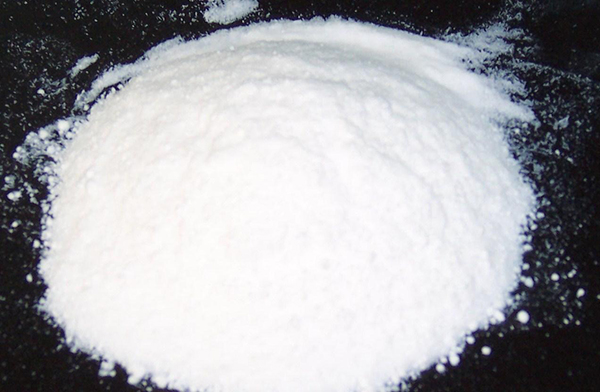
(August 05, 2026)In early August 2026, China’s precipitated silica industry enters the seasonal demand transition between summer and autumn, with obvious divergence in operating rates among downstream sectors. Intertwined driving forces including rapid growth of new‑energy industries, tightened environmental‑protection regulations, fluctuating raw‑material costs and shifting overseas market demand have brought profound changes to the landscape of domestic precipitated silica. Market differentiation has become more prominent. Ordinary filling‑grade precipitated silica is amply supplied amid fierce competition, squeezing corporate profit margins. High‑performance modified precipitated silica tailored for new‑energy tires, sealing silicone rubber, eco‑friendly coatings and biodegradable materials enjoys robust market demand alongside extended order delivery cycles. Field investigations covering major domestic production bases, trading channels and downstream enterprises such as tire, silicone and coating manufacturers reveal that market resources keep gravitating toward leading players with modification‑oriented R&D strengths and complete quality‑control systems. The survival space for business models relying on capacity expansion and price wars continues to shrink.
Overall supply‑side capacity remains high, while operating conditions vary sharply across different product grades. Precipitated silica for ordinary rubber goods and general‑purpose filler applications is readily available on the market. Many small‑and‑medium‑sized manufacturers maintain continuous plant operation to avoid shutdown losses and generally adopt a small‑profit high‑volume strategy. At present, tax‑inclusive transaction prices for domestic general‑grade products stand at RMB 5000‑5800 per ton. Intense market rivalry creates massive resistance against price hikes. Faced with upward raw‑material costs, most small‑and‑medium manufacturers absorb pressures by compressing profit margins, with some operating close to the break‑even threshold. In contrast, market enthusiasm stays high for high‑end precipitated silica featuring high dispersion, high specific surface area and surface modification. Order backlogs at leading producers stretch into Q4. As routine environmental inspections move forward, backward small‑and‑medium capacities with substandard wastewater disposal, insufficient solid‑waste handling capacity and excessive unit energy consumption keep exiting the market, lifting overall capacity concentration. Modern plants equipped with continuous synthesis, membrane‑separation water recovery and closed‑loop wastewater treatment processes have gradually become the main supply force. Meanwhile, multiple green‑manufacturing projects are under construction across China. Industrial‑scale facilities producing precipitated silica from industrial by‑product silicon feedstock and biomass resources are in construction and trial‑production phases. These initiatives will further improve domestic high‑end product supply, cut industrial‑wide energy consumption and carbon emissions, and narrow performance gaps versus imported high‑end filler products.
On the raw‑material front, sodium silicate and sulfuric acid remain core feedstocks for precipitated silica production. In August, certain sodium silicate units enter annual maintenance, triggering periodic supply contraction. Coupled with higher energy costs for coal and electricity, the whole industry is under substantial cost pressure. Severely homogenized general‑grade precipitated silica holds weak bargaining power, making cost pass‑through to downstream users difficult. Benefiting from outstanding comprehensive properties such as reinforcement, thickening and anti‑settling performance, high‑end modified precipitated silica supports market‑accepted product premiums and effectively hedges shocks from raw‑material price volatility, serving as the primary profit source for manufacturers. Rising logistics and warehousing costs have also reshaped traditional industry circulation patterns. The former model of concentrated production in western China plus large‑scale nationwide distribution is gradually fading. Downstream processors prefer local raw‑material sourcing, amplifying locational advantages of industrial clusters. Producers near downstream‑intensive regions in East and South China gain growing logistics‑cost advantages, while the volume of long‑distance cross‑regional bulk cargo transportation declines.
Demand rises steadily across numerous downstream application sectors, and new‑energy tires remain the most critical growth driver for the industry. Domestic new‑energy vehicle ownership keeps growing. Automakers impose stricter requirements on tire rolling resistance, wear resistance, noise performance and safety, compelling tire producers to raise loading levels of high‑dispersion precipitated silica within formulations. Industry survey data indicates that precipitated silica is expected to account for nearly 69 % of material consumption in domestic new‑energy supporting‑tire formulations in 2026. Tire manufacturers enforce increasingly stringent controls over filler impurity levels, powder dispersion effect, cross‑batch indicator stability and heavy‑metal limits. Conventional general‑grade precipitated silica can no longer satisfy performance specifications for new‑energy tire formulations, pushing filler manufacturers to accelerate technical transformation and product upgrading.
Booming photovoltaic and energy‑storage sectors fuel capacity expansion in the silicone industry and boost consumption of medium‑to‑high‑end precipitated silica. As an indispensable reinforcing filler for silicone rubber, precipitated silica’s BET specific surface area and DBP oil‑absorption value directly govern key finished‑product properties including tensile strength, tear strength, ageing resistance and UV resistance. Continuous capacity release for domestic photovoltaic modules, energy‑storage encapsulant adhesives and electrical‑electronic sealants lifts market demand for high‑purity precipitated silica with medium‑to‑high specific surface area. According to industry statistics, year‑on‑year consumption growth of precipitated silica in China’s silicone sector is projected to exceed 13 % in 2026. Downstream customers demand diversified powder particle sizes, with steady procurement for the full mesh range from 200 mesh to 4000 mesh. The capability of production lines to flexibly switch among multiple specifications while guaranteeing batch consistency across mesh grades has become an important hard criterion for downstream supplier screening.
Guided by VOC emission‑reduction policies, the coatings and adhesives industry presses ahead with water‑borne transformation. Annual output of water‑borne industrial anti‑corrosion coatings, architectural waterproof coatings and eco‑friendly water‑borne adhesives keeps increasing, driving sustained demand growth for modified precipitated silica. When unmodified precipitated silica is directly incorporated into water‑borne formulations, powder agglomeration, sedimentation and delamination readily occur. Surface‑modified precipitated silica integrates thickening, matting, anti‑sagging, anti‑settling and wear‑resistant reinforcement functions, making it an essential functional filler for water‑borne coating formulas. Beyond traditional coatings‑and‑adhesives markets, the biodegradable‑plastics industry enjoys rapid development. During modification and processing of biodegradable resins such as PLA and PBAT, special precipitated silica acts as reinforcing agent, anti‑caking additive and nucleating agent. It improves material processability and finished‑part mechanical properties and opens new market avenues for precipitated silica.
The export market maintains positive momentum, and global influence of domestic precipitated silica continues to grow. Sustained capacity expansion within Southeast Asian and South Asian tire industries keeps these territories as major overseas destinations for Chinese products. Export volumes of REACH‑registered high‑dispersion high‑end grades to European and American markets increase year‑over‑year. Overseas customers show rising recognition of domestically‑produced high‑performance fillers, accelerating import substitution within high‑end segments. The previous export structure dominated by low‑end general‑grade goods is transforming. The export share of high‑value‑added modified precipitated silica keeps climbing, further consolidating China’s position within the global new‑material supply chain.
In terms of R&D priorities, key research targets include green synthesis processes, in‑situ powder modification, precise pore‑structure regulation and thorough impurity purification. Carbonization‑route and biomass‑based precipitated silica processes are continuously optimized to cut carbon emissions while enhancing powder reinforcing capacity and dispersion performance. In‑situ modification technology completes surface treatment during powder synthesis, eliminating extra downstream silane coupling‑agent addition steps and lowering comprehensive end‑user costs. It is compatible with diverse complex formulation systems including rubber, silicone, coatings and biodegradable plastics. Downstream procurement criteria have likewise evolved. Instead of focusing merely on silicon‑dioxide content, stability across a full suite of indicators such as BET specific surface area, DBP oil‑absorption value, particle‑size distribution, pH value, ignition loss, heating loss and heavy‑metal content serves as the core reference for product selection. IOTA9002 precipitated silica delivers dry‑basis SiO₂ ≥98 %, covers the full particle‑size range of 200‑4000 mesh and maintains stable batch‑to‑batch indicators. Widely applied in rubber, sealants, coatings, rubber‑plastic filling and other fields, it has earned recognition from numerous downstream clients.
Looking forward to market trends: in the short‑term August‑September period, general‑grade precipitated silica will remain exposed to fierce competition with limited room for substantial price increases, maintaining an overall weak‑stable operating posture. Backed by robust downstream demand from new‑energy tires, photovoltaic silicone, water‑borne coatings and biodegradable plastics, high‑dispersion custom‑modified high‑end precipitated silica will retain strong industry prosperity. In the medium‑and‑long term, further implementation of China’s dual‑carbon policies will raise environmental‑protection access thresholds, and outdated high‑energy‑consumption capacities will continue to exit the market. Industry competition moves beyond pure price rivalry toward comprehensive contest covering production technology, customized R&D, end‑to‑end quality control and green manufacturing capability. Going forward, enterprises capable of flexibly tuning powder performance to match downstream formulation requirements and consistently delivering high‑quality products will keep expanding market share in both domestic and global markets.