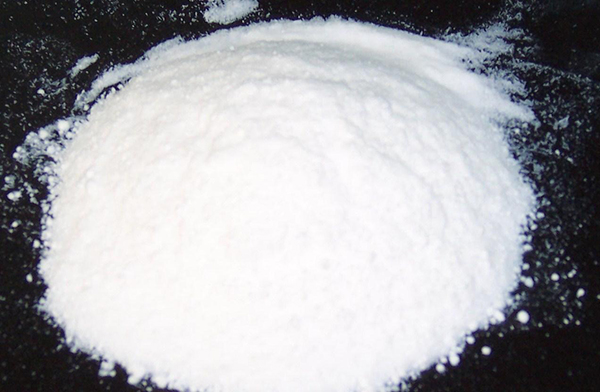
(August 11, 2026)On August 11, 2026, China’s white carbon black market entered its mid-August operational phase. Following sluggish demand and muted trading throughout the July off-season, downstream terminal sectors including tire & rubber, water-based coatings, photovoltaic and energy storage supporting industries have successively launched pre-peak stockpiling plans. Market inquiry activity has picked up gradually, and total spot trading volume has climbed steadily. Prices of upstream basic chemical raw materials such as soda ash, sulfuric acid, water glass and organosilicon monomers have kept edging up slightly, forming solid cost support. The traditional rubber industry is actively preparing inventories for the autumn and winter sales season, while demand continues to surge in emerging fields covering new energy vehicles, photovoltaic encapsulation and electronic insulating materials. The combination of multiple positive factors has lifted the overall white carbon black market moderately. Nevertheless, long-standing structural supply-demand contradictions within the industry have yet to be resolved. Conventional precipitated silica suffers from severe overcapacity and mounting inventory backlogs, leaving little momentum for price increases. Modified functional silica formulated for energy-saving green tires, electronic potting adhesives and premium daily skincare products remains in tight supply, attracting continuous domestic and overseas orders, which further widens price gaps across regions and product tiers.
In terms of nationwide spot quotations, tiered pricing and regional disparities in the white carbon black market have become increasingly prominent this week. Data monitored by chemical industry big data platforms shows the average domestic price of precipitated silica has risen marginally. As the national core hub for production and distribution, East China posts tax-inclusive ex-factory prices ranging from 6,120 to 6,480 yuan per ton for high-dispersion precipitated silica dedicated to new energy passenger vehicle tires. In northern and southern production areas including Shandong, Hebei, Fujian and northern Jiangsu, ordinary industrial filler-grade silica faces notable sales pressure, with mainstream spot transaction prices falling between 5,380 and 5,950 yuan per ton. Dragged down by weak downstream demand, low-end general filler-grade silica has lingered at depressed prices for a long time, with the average transaction price below 2,850 yuan per ton. High-purity specialty silica used for food anticaking agents and pharmaceutical excipients maintains stable prices above 6,780 yuan per ton, backed by stringent production thresholds and consistent rigid demand. Benefiting from tightened upstream organosilicon supply, the fumed silica market stays robust consistently. Domestic conventional hydrophilic fumed silica is quoted at 20,800–24,400 yuan per ton, while premium hydrophobically modified fumed silica holds steady at 26,400–29,600 yuan per ton. Imported high-end hydrophobic fumed silica is in acute spot shortage; order delivery schedules are generally postponed until late September, with quotations ranging from 30,200 to 40,200 yuan per ton.
Sustained cost support firmly safeguards the market price floor. Soda ash, the core raw material for precipitated silica production, has entered its annual centralized equipment maintenance cycle. Multiple domestic soda ash production lines have been shut down for overhaul, reducing market supply and pushing spot prices roughly 550 yuan per ton higher month-on-month. Sulfuric acid prices rose moderately amid rebounding operating rates in downstream fertilizer and metallurgical industries alongside routine plant maintenance. Stable quotations of industrial silicon and methylchlorosilanes have directly raised the overall processing costs of fumed silica. Meanwhile, China has intensified dual energy consumption controls and environmental supervision. Mandatory assessment standards covering resource recycling of production wastewater, recovery and reuse of by-product sodium sulfate, and energy consumption quotas per unit product have been fully enforced. A large number of small and medium-sized manufacturers equipped with outdated technologies, inadequate environmental compliance and excessive energy consumption have been forced to cut output, suspend production or withdraw from the market entirely. Industrial capacity continues to concentrate among leading enterprises, effectively curbing chaotic vicious low-price competition.
Downstream demand follows a dual-driving pattern: recovery in traditional segments and robust expansion of emerging sectors. The tire and rubber industry remains the largest consumption scenario for white carbon black. As the traditional autumn and winter sales season draws near, major domestic tire manufacturers have steadily raised production line operating rates. Formulations for new energy vehicle tires are continuously updated and optimized, lifting the proportion of high-dispersion silica year after year. Capable of lowering tire rolling resistance, extending electric vehicle driving range, boosting road grip on rainy and snowy days and prolonging tire service life, this grade enjoys full order backlogs and vibrant production and sales. Manufacturers of traditional rubber and plastic goods such as rubber hoses, sealing gaskets, rubber shoe soles and industrial conveyor belts only conduct small-batch replenishment on demand, without large-scale centralized stockpiling.
Demand from water-based eco-friendly coatings, home renovation and outdoor infrastructure protection sectors has been steadily released. The penetration rate of eco-friendly water-based coatings keeps rising, driving steady growth in demand for white carbon black as a rheology regulator, matting agent and pigment anti-settling additive. With the arrival of autumn, urban exterior wall renovation, stone preservation, and concrete waterproofing & anti-seepage projects for bridges and underground parking garages commence intensively, expanding application scenarios for hydrophobic silica compounded with silane systems. Silicone sealants for photovoltaic module encapsulation, potting adhesives for energy storage battery modules and insulating silicone rubber for electronic components have become the core growth engines of the industry. Steady expansion of China’s newly installed photovoltaic capacity fuels the development of the silicone rubber sector, pushing the year-on-year consumption growth rate of white carbon black in this field above 15%. Custom trial orders and bulk procurement requests for ultra-fine modified precipitated silica and hydrophobic fumed silica keep pouring in. In addition, steady demand growth in fine chemical subdivisions including pesticide sustained-release carriers, daily chemical thickeners and feed anticaking agents has continuously expanded the application boundaries of white carbon black.
Production scheduling plans differ markedly across suppliers. The precipitated silica sector boasts massive overall capacity, and inventories of low-end generic products remain excessively high. To avoid losses from unsold inventory, small and medium-sized factories keep operating rates between 77% and 84%, strictly implementing the production-to-order model and cutting output of low-end filler products. Leading enterprises have taken the initiative to optimize product portfolios by slashing capacity for low-priced general grades and concentrating production on functional silica varieties including tire-specific high-dispersion, hydrophobically modified and ultra-fine nano grades. This move effectively alleviates inventory pressure and steadily improves overall profitability. Restrained by insufficient supply of upstream organosilicon monomers, the overall operating rate of the fumed silica sector remains low at 68%–71%, with limited total spot inventories and strong resilience against price declines. The export market operates steadily. Steady demand for infrastructure and construction materials in Southeast Asia, green tires in Europe and daily rubber and plastic processing goods in Latin America has continuously lifted the global reputation of high-performance Chinese white carbon black. Sufficient overseas orders effectively offset fierce competition in the domestic low-end market and serve as a pivotal driver boosting industrial revenue growth.
The industry is speeding up green low-carbon technological upgrading and high-end technological research and development. Domestic new material enterprises keep breaking through core preparation technologies for high-dispersion silica, bringing key performance indicators such as reinforcing capacity, weather resistance, anti-aging property, wear resistance and tear resistance gradually in line with top international standards, and accelerating the pace of import substitution for high-end products. The widespread adoption of recycled production wastewater and recovered by-product sodium sulfate not only cuts pollutant emissions but also reduces comprehensive production and operational costs for enterprises. Globally, major overseas chemical conglomerates continue to expand white carbon black capacity in North America to support green tire manufacturing. This creates more opportunities for Chinese products to enter overseas markets while intensifying international competition.
Based on comprehensive evaluations from multiple chemical research institutions: the traditional peak consumption season will fully kick off from late August to early September. Tire and rubber goods manufacturers will markedly ramp up stockpiling efforts, and stable upstream raw material costs will provide solid support, leaving room for a mild uptick across the entire white carbon black market. However, excess capacity of conventional precipitated silica cannot be fully digested in the short term, eliminating the possibility of sharp price hikes; prices will generally trend slightly upward amid fluctuations. High-dispersion tire-specific silica, hydrophobic fumed silica and new energy-oriented modified silica will stay in tight supply, registering far larger price gains than ordinary industrial-grade varieties. In the long run, phasing out backward low-end capacity, deepening R&D into functional modification technologies, capturing development dividends of the new energy industry, and steadily expanding overseas export channels are the inevitable path for China’s white carbon black industry to escape vicious low-price competition and achieve green, high-end, high-quality and sustainable development.