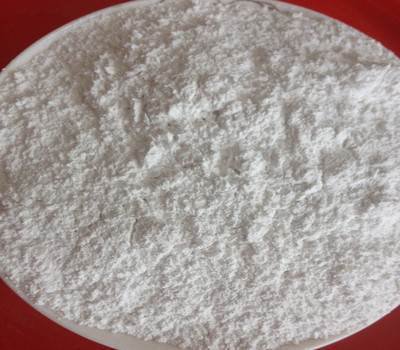
(August 10, 2026)With intense heat fading nationwide and power consumption pressures for production effectively eased across regions, numerous downstream industries including rubber manufacturing, industrial coatings, construction sealant materials, daily chemicals and cosmetics have resumed regular full-capacity production. China’s white carbon black sector has officially entered the pre-stocking phase ahead of the traditional sales peak season. Based on industrial chain data tracked continuously by multiple chemical information platforms, trading sentiment across the domestic white carbon black market picked up steadily on August 10. Precipitated products still dominate the mainstream market share, while high-end fumed varieties remain firm thanks to robust demand from the new energy track. The supply-demand polarization within the industry has become increasingly evident, and low-carbon transition as well as high-end upgrading have permeated the entire industrial operation.
Precipitated white carbon black remains the mainstream consumption product in the domestic market, and its price trend directly shapes the overall performance of the industry. During the prolonged heatwave in July, factories in many areas curbed production loads due to power rationing and high-temperature safety production regulations. Tire plants, rubber seal manufacturers, conveyor belt producers, as well as factories producing anti-corrosion coatings and daily plastic goods scaled down production schedules, only placing sporadic small replenishment orders for raw materials. Market inquiries were scarce, spot commodity circulation slowed down, many traders were saddled with heavy inventory backlogs and faced persistent capital turnover stress. After temperatures dropped in August, production order was fully restored at downstream terminal factories. Coupled with the approaching September traditional consumption peak season, downstream enterprises showed markedly stronger willingness to stock up in advance, triggering concentrated release of raw material purchasing demand throughout the rubber industrial chain. Recently, spot trading volume surged by over 20% compared with the previous month. Nevertheless, the long-standing issue of excessive low-end capacity has not been resolved. A large number of small and medium manufacturers hold massive inventories of standard general-grade white carbon black. To accelerate capital recovery, merchants generally sell products at discounted prices, which greatly limits room for price hikes of basic goods, resulting only in slight tentative increases. Price gaps between segmented products keep widening: conventional loose precipitated white carbon black sells smoothly at mainstream factory prices ranging from 5,600 to 5,800 RMB / ton; microsphere grades with outstanding anti-settling properties tailored for coating systems are steadily quoted at 5,850 to 6,100 RMB / ton; high-reinforcement and high-dispersion white carbon black exclusively used for low rolling resistance tires of new energy vehicles is in tight supply. Leading tire enterprises place long-term fixed-price orders, keeping transaction prices stable between 6,300 and 6,700 RMB / ton. Ultra-fine high-purity white carbon black applied as food anticaking agents and pharmaceutical excipients enjoys stable year-round demand barely affected by seasonal swings, maintaining prices at 6,400 to 6,800 RMB / ton.
Overseas exports maintain strong momentum, firmly underpinning the overall precipitated white carbon black market. Infrastructure projects in Southeast Asia, the Middle East and Latin America have been launched one after another, widening local capacity shortages in rubber processing and architectural coatings, and driving steady growth in China’s white carbon black procurement orders. Boasting favorable cost performance, domestic high-end tire-grade white carbon black has continuously captured overseas market shares previously occupied by established European and American chemical enterprises, delivering remarkable results in both import substitution and export expansion. China’s total export volume of white carbon black rose by 12.7% month-on-month in the past month. Mass overseas orders have effectively digested surplus low-end domestic inventories, relieved sales pressures in the home market, and laid a solid foundation for spot prices.
Structural disparities are more pronounced in the fumed white carbon black market, whose overall trend is jointly governed by fluctuations in upstream raw material costs and demand from emerging sectors. Methyltrichlorosilane, the core raw material for fumed white carbon black, sits at the upper reaches of the organosilicon industrial chain. This summer, energy consumption control and staggered production policies were implemented nationwide, restricting the operating rates of organosilicon monomer plants and tightening raw material supply. Procurement costs edged up moderately, bringing mild upward pressure to fumed white carbon black prices from the cost side. Demand varies drastically across sectors: traditional fields remain sluggish. Purchasing activities for construction sealants, ordinary silicone rubber and general plastic reinforcement proceed slowly, with transactions mainly consisting of scattered small restocking orders. In contrast, demand keeps expanding in new energy and fine chemical sectors including photovoltaic encapsulant adhesives, lithium battery separator coatings, electronic potting adhesives, premium liquid silicone rubber, thermal conductive pads, and skincare & cosmetic raw materials. Hydrophilic and hydrophobic modified high-end fumed white carbon black is in short supply, leading to extended order cycles and steadily rising prices for manufacturers. By contrast, demand for mid-to-low grade general fumed white carbon black stays weak, and producers arrange production strictly according to orders to clear inventories. Currently, the overall operating rate of China’s fumed white carbon black industry hovers around 65%. Enterprises voluntarily cut production capacity to avoid operating losses caused by low-price sales.
Green low-carbon renovation and high-end product upgrading have become an inevitable path for the white carbon black industry. With the official rollout of the global carbon tariff system and increasingly stringent low-carbon access standards for overseas buyers, leading domestic white carbon black enterprises have successively developed low-carbon circular production processes. Silica extracted from renewable waste such as rice husk ash, industrial waste silica residue and organosilicon byproducts is adopted to produce white carbon black, drastically cutting fossil fuel consumption and reducing product carbon footprints. This not only meets the mandatory low-carbon procurement requirements of overseas clients, but also continuously enhances the international competitiveness of domestic products. Meanwhile, the industry is speeding up the phase-out of outdated, high-energy-consuming and inferior production lines, cutting homogeneous low-end capacity, and concentrating R&D resources on developing specialty new materials: white carbon black dedicated to lithium battery coatings, high-transparency optical fillers, pharmaceutical high-purity silica, and aerogel composite modified white carbon black, so as to break free from the long-standing predicament of vicious price competition driven by product homogenization. Many enterprises have deepened university-industry-research collaboration to conduct surface graft modification on white carbon black powder, improving its dispersibility and compatibility with various substrates, and continuously broadening the scope of product application scenarios.
Major chemical research institutions have forecast the future market trend based on current supply and demand conditions: In mid-to-late August, peak season demand from downstream rubber and coating industries will be fully unleashed, accompanied by a nationwide stocking boom ahead of the Mid-Autumn Festival. High-dispersion precipitated white carbon black, modified fumed white carbon black, as well as food and pharmaceutical-grade high-purity white carbon black still hold upside price potential. Restrained by abundant inventories, conventional general precipitated white carbon black will continue narrow sideways fluctuations at low levels. Three key factors deserve sustained attention hereafter: adjustments to energy consumption control policies, price volatility of upstream organosilicon raw materials, and changes in overseas trade orders. In the long run, China’s white carbon black industry has entered a brand-new structural development cycle. Rising prices for high-end products and persistent downward pressure on low-end varieties will become the new normal, while the new energy and premium advanced materials sectors will serve as the core growth engines of the industry permanently.