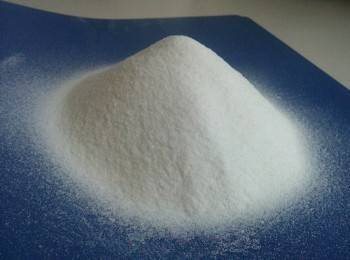
(August 08, 2026)In early August, China’s precipitated silica market is in the pre‑heating phase for peak demand, with operating rates of downstream industries rising slowly and market trading sentiment gradually improving. After years of industrial accumulation, domestic precipitated silica has moved beyond simple imitation and catch‑up. Import substitution has advanced from mere physical‑chemical‑index benchmarking toward in‑depth development including real‑world formula compatibility, long‑term service stability and multi‑scenario customized development. The market for general‑grade industrial products is highly saturated, and price competition keeps squeezing corporate profits. In high‑end rubber, personal‑care, pesticide‑auxiliary and new‑energy composite‑material sectors, domestic precipitated silica is continuously breaking monopolies held by overseas brands. Enterprises equipped with application‑technical‑service capabilities are gradually gaining market initiative. Cost‑control strength and formula‑application technology jointly form two core moats helping manufacturers withstand industrial cycles.
From the supply‑side perspective, China boasts a large capacity base for precipitated silica, and new capacity additions are mostly concentrated among leading enterprises. The industry no longer blindly expands capacity for general‑purpose powder. New‑build and technical‑renovation projects mostly take flexible production of high‑end grades into account. A single production unit can switch among multiple specifications for tire reinforcement, daily‑chemical carriers and pesticide auxiliaries. Constrained by salt‑containing wastewater disposal and energy‑consumption quotas, small‑and‑medium‑sized plants show obvious order‑driven production swings: running at full capacity amid market upturns while cutting loads to hedge risks when demand weakens, bringing periodic supply disturbances. Resource‑oriented wastewater treatment has become a core focus of technical transformation. Facilities for salt recovery and mother‑liquor recycling keep being put into service. They not only cut pollutant‑treatment costs but also satisfy overseas clients’ audits for low‑carbon production and carbon‑footprint traceability. Market reshuffling continues. Small‑and‑medium‑sized capacities lacking R&D strength and complete environmental‑protection facilities keep exiting, further lifting industrial concentration.
In terms of raw‑material costs, price volatility of quartz sand and soda ash directly affects purchasing costs of sodium silicate. Together with utility expenses for sulfuric acid, steam and electricity, it keeps production costs of precipitated silica under long‑term pressure. Oversupply of general‑grade silica grants strong bargaining power to downstream buyers, and raw‑material cost hikes can hardly be passed downstream. Most manufacturers of conventional grades only achieve slim returns. Relying on special pore‑structure design, surface‑modification processes and strict impurity control, high‑end customized silica features high technical barriers and stronger capacity to absorb and transfer cost increases. Many producers actively optimize supply chains and sign long‑term agreements with upstream sodium silicate suppliers to mitigate raw‑material fluctuations. Meanwhile they optimize synthesis processes to boost raw‑material conversion efficiency and reduce auxiliary‑material consumption. Adjusting product portfolios and raising output share of high‑value‑added products has become an important way for most enterprises to improve profitability.
Divergence in downstream demand becomes more pronounced. Rubber tires remain the largest consumption market for precipitated silica. Demand for traditional tires stays stable. The rapid growth of new‑energy‑vehicle industry drives continuous iteration of tire formulas, setting higher standards for filler dispersibility, wear resistance and low rolling resistance, and fueling steady rising demand for high‑dispersion tire‑grade silica. Silicone seals, special rubber rollers and shock‑proof rubber articles maintain steady procurement of low‑impurity, high‑reinforcement silica. In the coatings‑and‑inks sector, engineering projects start intensively in the second half of the year. Water‑borne paints, powder coatings and industrial protective coatings boost demand for matting and anti‑settling silica. Different coating systems impose diverse requirements on oil‑absorption value and dispersibility, generating substantial customized procurement needs. Fine‑chemical fields such as toothpaste, feed and pesticides enforce strict limits on heavy‑metal content, ignition loss and microorganism indicators with high market entry thresholds and steady demand growth. Emerging tracks including lithium‑ion batteries, aerogels, degradable polymers and thermal‑insulation composite materials keep conducting formula‑compatibility tests, continuously expanding new application boundaries for precipitated silica and bringing considerable incremental market space.
On the foreign‑trade front, China’s export volume of precipitated silica remains stable and export product mix keeps optimizing. Markets in Southeast Asia and the Middle East still purchase large volumes of cost‑effective general‑purpose industrial‑grade silica. Trade barriers keep rising in European and American markets. REACH registration, carbon‑footprint reports and food‑contact safety certificates have become hard prerequisites for many orders. The export proportion of high‑end modified and personal‑care‑grade food‑contact silica keeps climbing. Established overseas chemical enterprises and suppliers from newly‑emerging producing countries keep competing for global market shares, and external competitive pressure cannot be underestimated. Besides guaranteeing physicochemical indicators and batch‑to‑batch stability, domestic exporters need to complete full sets of compliance documents, build overseas technical‑service systems and deeply participate in downstream customers’ formula development to further increase global market share of domestic products.
In R&D, industrial focus shifts from replicating physicochemical indicators toward application‑effect development under real‑world working conditions. In‑situ surface‑modification technology, precise pore‑structure regulation and closed‑loop recycling of salt‑containing mother liquor are major research priorities. Many high‑end grades once relied heavily on imports. Domestic enterprises increase investment in application‑laboratory construction, carry out compatibility tests simulating clients’ actual production environments, and tailor pore volume, specific surface area and surface‑active groups of silica for different rubber and resin systems. They transform from powder suppliers into filler‑solution providers. Widely deployed intelligent central‑control systems realize fine management of reaction temperature, pH value and feeding rate, effectively reducing performance deviations across batches. Patent layouts balance product‑performance improvement and green production. Continuous technical research is carried out on by‑product resource recovery and low‑energy‑consumption synthesis processes, satisfying multiple requirements for domestic environmental‑protection compliance as well as export carbon accounting.
According to comprehensive industrial‑chain research, overall demand for precipitated silica is expected to further rebound in mid‑to‑late August with the full arrival of the traditional downstream peak season. Nevertheless, inventory pressure for general‑grade products remains heavy, there is no basis for sharp price surges, and market conditions will stay in consolidation and fluctuation. Market opportunities concentrate in high‑value‑added niche segments including high‑dispersion tire‑grade, coating‑matting, fine‑use carrier and new‑material supporting silica. For manufacturers, refining cost‑control systems, deepening downstream formula‑application technologies, deploying flexible production facilities and accumulating export‑compliance documentation are key to achieving import substitution and navigating industrial cycles. During raw‑material selection, purchasers shall not merely compare quotations. They should attach importance to batch‑to‑batch stability, impurity‑control capability and suppliers’ environmental‑protection compliance, select suitable grades matching their own formula systems, arrange stocking plans scientifically and mitigate supply‑chain risks arising from market volatility.